


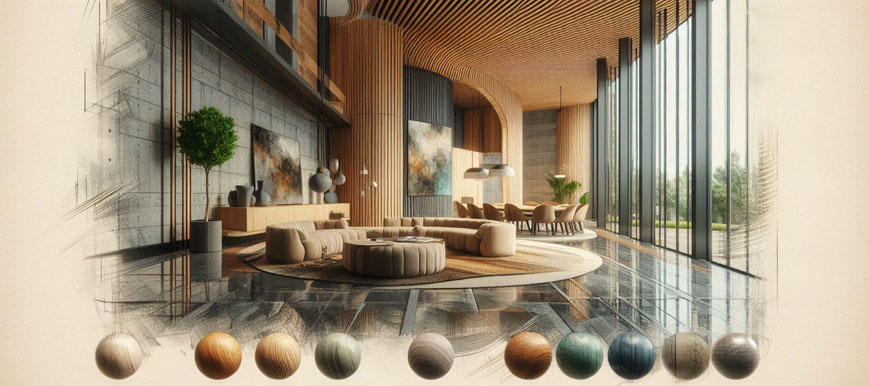
Material visualisation allows designers, engineers, architects, and marketers to showcase and evaluate different finishes for both products and architectural projects in a realistic and interactive way. It’s an essential tool across industries including technology, automotive, medical devices, and interior architecture where surface quality, texture, and colour are critical.
High-fidelity 3D visualisations help teams assess material choices early. Designers can experiment with textures, reflectivity, colour combinations, and finishes without costly physical prototypes, accelerating decision-making and ensuring cohesive design across products and building elements such as walls, facades, and furnishings.
For technical and mechanical products, material visualisation highlights metallic finishes, coatings, and functional textures such as rubber grips or machined surfaces. Animations can demonstrate surface behaviour under light, assembly sequences, and mechanical interactions. For architectural elements, materials like concrete, glass, and timber are visualised to evaluate aesthetics and structural impact.

“Material visualisation ensures products and architectural projects not only look appealing but perform as expected in real-world conditions.”
Medical devices demand precise material selection for safety, durability, and sterilisation. Architectural healthcare spaces also require careful material choices for hygiene and durability. Visualising plastics, metals, composites, and architectural finishes in 3D ensures correct selections and supports better decision-making for both medical products and hospital interiors.
Material visualisation enables clients to explore colourways, textures, and surface treatments for products as well as interior finishes such as flooring, wall panels, and furniture. Interactive renders allow stakeholders to compare options, improving confidence in the final decision.
Modern 3D software supports real-time rendering where materials can be swapped instantly, lighting adjusted, and finishes previewed for both products and architectural surfaces. This accelerates iteration and improves communication between designers, engineers, and clients.
Material visualisation bridges design, engineering, and architecture. By showcasing realistic finishes for technical, mechanical, medical, consumer products, and architectural projects, teams can make informed choices, reduce risk, and elevate design quality. Businesses embracing this technology achieve faster development, more cohesive design, and richer visual communication.